
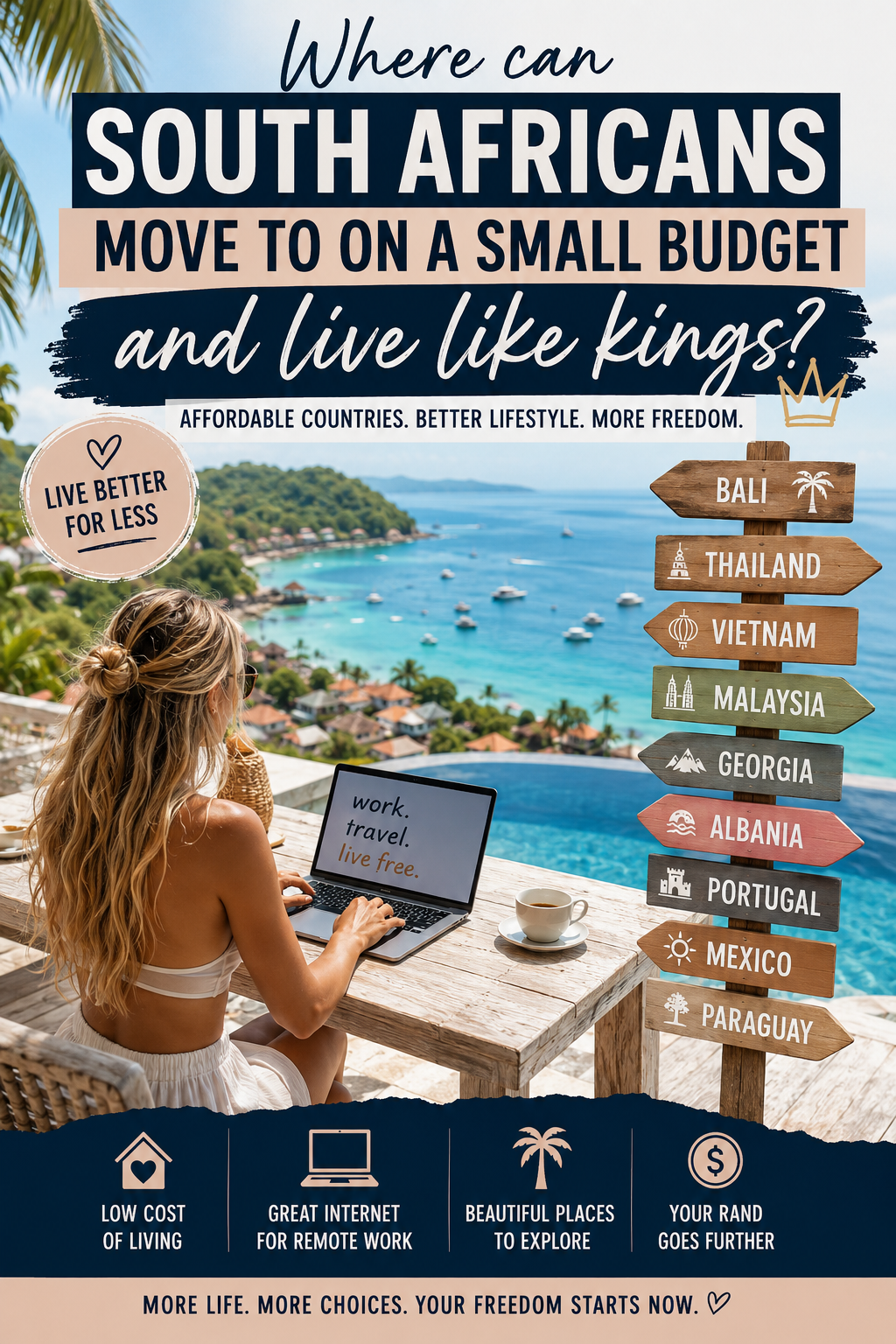
Want to Live Like a King on a South African Passport?
Where Can South Africans Move on a Small Budget and Still Live Like Kings?
You don’t need millions in the bank to build a better life abroad — you need the right destination.
Introduction
Ask most South Africans about moving overseas, and you’ll usually get the same reaction: “That’s for rich people.” We picture emigration as something that only happens once you’ve sold a house, cashed out a pension, or landed a six-figure job offer somewhere far away.
And to be fair, that reputation isn’t entirely wrong. Countries like Australia, Canada, and the UK are incredible places to live — but getting there properly, with the right visa, savings buffer, and set-up costs, can easily require hundreds of thousands of rand before you even board the plane.
Here’s the good news nobody tells you: those aren’t the only options.
There’s a whole list of countries where the Rand — even a modest amount of it — stretches far enough to buy you a genuinely better lifestyle than you currently have in South Africa. Lower rent, safer streets, better weather, and enough left over to actually enjoy your life instead of just surviving it. You don’t need millions in the bank. You need a plan, a bit of flexibility, and the right destination.
This guide walks you through exactly where that’s possible in 2026.
What Does “Living Like a King” Actually Mean?
Let’s clear something up first — this isn’t about yachts, five-star hotels, or private chefs. “Living like a king” on a small budget means something far more realistic and, honestly, far more valuable:
- Eating out regularly without stressing about the bill
- Safe neighborhoods where you’re not constantly looking over your shoulder
- Affordable rent that doesn’t eat 50%+ of your income
- Reliable internet so you can work, stream, and stay connected without drama
- Better work-life balance — actual free time, not just time off
- Beautiful weather most of the year
- The opportunity to earn online while your cost of living stays low
For many South Africans, that combination alone — safety, affordability, and a bit of sunshine — already feels like royalty.
Things to Consider Before Choosing a Country
Before we get into the destinations, it’s worth understanding the factors that actually determine whether a move will work for you long-term. A cheap country on paper can still be the wrong choice if you ignore these:
- Visa options — Can you actually live there legally, and for how long?
- Cost of living — Not just rent, but groceries, transport, and everyday extras
- Healthcare — Quality, cost, and whether private insurance is required or affordable
- Language — How easy is it to get by, do business, and make friends?
- Safety — Crime rates, political stability, and general peace of mind
- Internet — Non-negotiable if you plan to work remotely or run an online income
- Taxes — Local tax rules, plus how they interact with your South African tax residency
- Flight costs back to South Africa — Because you’ll still want to see family
With those in mind, let’s look at ten destinations where South Africans are already building better lives on modest budgets.
1Indonesia (Bali)
Bali has become the poster child of the digital nomad movement, and it’s easy to see why. Warm weather year-round, a strong sense of community, and a lifestyle built around beaches, cafés, and co-working spaces.
Why people love it
The mix of natural beauty, affordability, and an established international community makes it an easy place to land and settle quickly.
Typical monthly costs
Around $900–$1,500, depending on whether you live like a local in Ubud or lean into the more polished Canggu/Seminyak lifestyle.
Who it’s best for
Remote workers, freelancers, and anyone wanting a soft landing into expat life with plenty of support along the way.
2Thailand
Thailand has quietly been one of the best value destinations for decades, and it remains a top choice heading into 2026.
Bangkok vs Chiang Mai
Bangkok gives you a big, modern city with great transport and endless entertainment. Chiang Mai is slower, cheaper, and hugely popular with remote workers who want a more relaxed pace.
Affordable healthcare
Thailand’s private hospitals are excellent and cost a fraction of Western prices — a major reason retirees and remote workers choose it.
Amazing food & fast internet
Street food alone can keep your grocery bill remarkably low, without sacrificing quality. Reliable fibre is widely available, even outside the major cities.
Great for remote workers: Between the co-working culture, low costs, and established visa routes, Thailand consistently ranks as one of the easiest places to build a remote-work lifestyle.
3Vietnam
Vietnam is the destination people underestimate — until they visit.
- Very low rent: A comfortable apartment in Ho Chi Minh City or Da Nang can cost a fraction of equivalent South African rent.
- Excellent food: Vietnamese cuisine is fresh, cheap, and everywhere.
- Growing expat community: Da Nang in particular has become a genuine remote-work hub.
- Good internet: Fast, stable, and widely available in the main cities.
It’s not as polished as Thailand yet, but that’s exactly why the cost of living remains so low — and why early movers are benefiting most right now.
4Malaysia
If you want affordability without giving up modern convenience, Malaysia deserves serious consideration.
- Modern infrastructure: Kuala Lumpur feels like a first-world city, with public transport, shopping malls, and services to match.
- English widely spoken: One of the easiest countries on this list to navigate without learning a new language.
- Affordable condos: Quality apartments with pools and gyms are within reach on a modest budget.
- Excellent healthcare: Malaysia is a recognised medical tourism destination, meaning high standards at low costs.
It’s a strong option for South Africans who want lower costs but aren’t ready to fully leave the comforts of city living behind.
5Georgia (the Country)
Not to be confused with the US state, Georgia is one of the most underrated destinations for anyone leaving South Africa on a budget.
- Little-known gem: Still flying under the radar, which keeps costs low.
- Easy visas: Many nationalities, including South Africans, can enter visa-free for up to a year — a huge advantage for anyone wanting time to settle without visa stress.
- Beautiful scenery: Mountains, wine country, and a charming capital in Tbilisi.
- Low cost of living: Rent, food, and transport are all significantly cheaper than Western Europe.
- Fast internet: Surprisingly strong connectivity for the price point.
For South Africans wanting a genuinely easy entry point with minimal bureaucracy, Georgia is hard to beat.
6Albania
Albania is quickly becoming known as “Europe without the European price tag.”
- Mediterranean lifestyle: Coastal towns, good weather, and a relaxed pace of life.
- Affordable apartments: Rent that would be unthinkable in Western Europe.
- Growing digital nomad scene: More cafés, co-working spaces, and international communities appearing every year.
It’s still early days for Albania as an expat destination, which means today’s affordability may not last forever.
7Portugal (Smaller Cities)
Everyone talks about Lisbon — and that’s exactly why you should look elsewhere in Portugal.
- Braga — Young, vibrant, and considerably cheaper than Lisbon or Porto.
- Coimbra — A historic university city with a lower cost of living and strong sense of community.
- Viseu — Quiet, safe, and often overlooked, which keeps prices reasonable.
These smaller cities offer the same EU healthcare access, safety, and infrastructure as Lisbon, but at a noticeably lower cost. For South Africans wanting a foothold in Europe without the Lisbon price tag, this is one of the smartest moves on the list.
8Mexico
Mexico offers warmth, culture, and community — with a cost of living that consistently surprises newcomers.
- Mérida — Considered one of the safest cities in Mexico, with a growing expat base.
- Oaxaca — Rich in culture, food, and history, with a strong creative community.
- Puerto Escondido — A laid-back beach town increasingly popular with remote workers.
Affordable housing, a warm climate, and great established expat communities make all three worth researching.
9Paraguay
Paraguay rarely makes anyone’s shortlist — which is exactly why it deserves a mention.
- Very affordable: One of the lowest costs of living in South America.
- Simple residency options: Comparatively straightforward compared to many other countries on this list.
- Low taxes: An attractive setup for anyone earning online income.
- Large houses for low rent: Space that would cost a fortune elsewhere is genuinely affordable here.
It’s not glamorous, and it won’t suit everyone — but for pure value, it’s hard to beat.
10South America Hidden Gems
Beyond Paraguay, a few other South American destinations are worth researching:
- Ecuador — Low cost of living, pleasant climate, and a well-established expat and retiree community.
- Colombia (certain cities) — Cities like Medellín have transformed over the past decade into genuinely appealing, affordable places to live, provided you research neighborhoods carefully.
- Uruguay — More expensive than its neighbours, but if your budget allows, it offers exceptional stability and quality of life.
Cost Comparison Table
| Country | Monthly Budget (USD) | Rent | Internet | English Friendly |
|---|---|---|---|---|
| Bali | $900–$1,500 | Low | Excellent | Good |
| Thailand | $900–$1,500 | Low | Excellent | Good |
| Vietnam | $800–$1,300 | Very Low | Excellent | Moderate |
| Malaysia | $1,100–$1,800 | Moderate | Excellent | Excellent |
| Georgia | $900–$1,400 | Low | Excellent | Moderate |
| Albania | $900–$1,500 | Low | Good | Moderate |
| Portugal | $1,500–$2,500 | Higher | Excellent | Excellent |
| Mexico | $1,200–$2,000 | Moderate | Excellent | Moderate |
| Paraguay | $800–$1,300 | Very Low | Good | Limited |
How Much Money Should You Save Before Moving?
This is the question that stops most people from ever taking the leap — and the truth is, you don’t need as much as you think. But you do need a realistic buffer. Here’s what to plan for:
- Emergency fund — A safety net separate from your regular living costs, for the unexpected.
- Flights — Both your one-way ticket and at least one return trip home within the first year.
- Visa costs — Application fees, agent fees (if used), and any renewal costs.
- Rental deposits — Many countries require one to three months’ rent upfront.
- Health insurance — Non-negotiable, even in countries with affordable healthcare.
- First 3–6 months of living expenses — Enough runway to find your feet, adjust to the cost of living, and build local income if needed.
As a general rule, aim to have at least 6 months of expenses saved before you make the move. It won’t guarantee a stress-free transition, but it removes the panic of needing everything to work perfectly from day one.
My Biggest Advice
You don’t need every detail figured out before you go.
I see so many people spend years waiting for the “perfect time” — the perfect savings number, the perfect visa, the perfect plan. And in most cases, that perfect moment never actually arrives. What actually gets people out the door — and keeps them thriving once they land — isn’t a huge bank balance. It’s careful planning combined with a willingness to adapt once you’re on the ground.
You will figure things out you couldn’t have planned for from South Africa. That’s not a flaw in your plan — that’s just how moving abroad works.
Final Thoughts
Moving abroad doesn’t have to mean becoming rich first. It doesn’t require Australia-level savings or a Canada-level job offer.
For many South Africans, simply choosing the right destination can dramatically improve quality of life — safer streets, better weather, more affordable living — without dramatically increasing expenses. The key isn’t wealth. It’s research: understanding your visa options, knowing your real cost of living, and building an income you can take with you wherever you go.
The world is far more accessible than most South Africans realise. You just need to know where to look.
Ready to Start Planning Your Move?
If you’re dreaming of leaving South Africa but don’t know where to start, I’ve created a step-by-step guide that walks you through building an income first, and then choosing the right country for your lifestyle and budget.
Check Out My Escape Blueprint →
You don’t need to sell your house, quit your job, or gamble on a leap of faith to move abroad.
You need income that works from anywhere — built before you leave, not after.
Where Can South Africans Move To on a Small Budget and Live Like Kings is a real-world guide to the five countries where South Africans are relocating right now, and the exact income systems that make it possible on a modest budget: no trust fund, no corporate transfer, no six-figure savings account required.
Inside, you’ll find:
Five countries, mapped in detail — Portugal, Georgia, Thailand, Mauritius, and Mexico. Real visa income thresholds, real rent numbers, real grocery bills, real neighbourhoods to target and ones to avoid.
Two income models that qualify you for a visa — a step-by-step breakdown of the online income systems South Africans are actually using to hit the income requirements, built around time you already have, not time you don’t.
A 30-day action plan — week by week, from choosing your income model to opening your first international bank account, so you’re not staring at a blank page wondering where to start.
Real stories, real numbers — case studies of ordinary South Africans (engineers, teachers, designers, brokers) who built the income first and chose their country second, told with the actual dollar figures and timelines involved.
This is not a fantasy relocation book. It will not tell you to sip cocktails on a beach while the universe provides. It is a practical, numbers-first guide for people who want out of the load-shedding, the crime anxiety, and the currency slide — and are willing to build something before they leave, rather than hope it works out after.
If you are a South African who has thought “one day” more times than you can count, this book turns “one day” into a plan you can start this month.

One Comment